Upcoming Events – May and June 2024
Monday, April 15th, 2024 | Speaking, Wrestling | No Comments
May 9 – Ben Peterson, two-time Olympic wrestling medalist (gold in 1972 and silver in 1976) and also a two-time NCAA champion for Iowa State, will be the featured speaker at the “Voices of Inspiration” program sponsored by the United Way of Jasper County. Ben is a terrific speaker with a powerful message about his Christian faith and lifestyle, and the value of sports in general. He will have his book “Road to Gold” on sale. Mike wrote the introduction for the book and will introduce Ben. The event will take place at the DMACC Auditorium in Newton, beginning at 6:30 p.m. Admission is free, and donations are welcome.
May 16 – Mike will be a speaker at the same event a week later and at the same place and time. He will talk about his book-writing career and offer stories about the many fascinating people he has met during his 40-year journalism career – including Ronald Reagan, Muhammad Ali, Robert Redford and many other stars of film and sports. Mike has appeared in nine documentaries, over 100 radio talk shows, and has been featured on ESPN, Fox Sports, the A&E Network, Iowa Public Television and the popular morning show, Fox and Friends. He has written 32 books and will have some of them for sale. Admission is free.
June 12 – The Jasper County Musuem in Newton holds a “Brown Bag Lunch” monthly to attract people to the beautiful facility and Mike will be the guest speaker there on June 12, beginning at 11:30 am. He will talk about his many experiences in journalism and have a few of his 32 books for sale. The event is open to the public and free of charge.
June 22 – Martin “Farmer” Burns is one of the most influential figures in the history of Iowa sports and on this date a memorial plaque in his honor will be unveiled in the tiny berg of Big Rock, Iowa, where he was born and raised, and Mike will be a featured speaker at the event. Farmer Burns was a world champion in professional wrestling in the early 1900s, and had over 6,000 matches, losing just six. He helped coach the first-ever high school state championship team in 1921, and also trained Humboldt’s Frank Gotch, the greatest wrestler in history. Mike has written extensively about Farmer Burns and was asked by Wes Fox, a longtime Burns fan, to help with the project. It will take place at 4 p.m. in Big Rock, about 50 miles east of Cedar Rapids, and is free to the public. Several Farmer Burns historic items will be on display.
2024 WIN Show – Mike and Bev at Their Final WIN Show
Monday, March 4th, 2024 | Book Signing, Books, WIN Magazine, Wrestling | No Comments
Once again, Mike and Bev will have tables full of wrestling books and memorabilia for sale at the WIN/Fan Expo during the Division 1 NCAA Championships. The Expo will be held March 21-23 at the Kansas City Convention Center a few blocks from the wrestling arena, and 20,000 fans are expected to attend the Fan Expo over the three days.
It will be the final WIN Show for Mike and Bev, after creating it back in 1992 to offer fans a good place to gather between sessions of the tournament, the biggest showcase for amateur wrestling in the U.S. The first WIN Show had four exhibitors and drew about 600 fans. The special guests were two true legends – Dan Hodge of Oklahoma and Verne Gagne of Minnesota.
The show continued to grow rapidly through the years, and among the great guests they brought to the event were Doug Blubaugh, Bill Smith, Dan Gable, Randy Couture, Kurt Angle, Lee Kemp, John and Ben Peterson, Wayne Baughman, Wade Schalles, and many more!
“Bev and I have been honored to be a part of the show for over three decades, and we have truly enjoyed meeting all the fans that have made their way to our tables,” says Mike. “But the time has come for me to call it a day. At age 80, it’s just too difficult to prepare and set up. Kansas City will be our last WIN Show”.
They will have many of Mike’s 32 books for sale, along with various wrestling items, some quite rare.
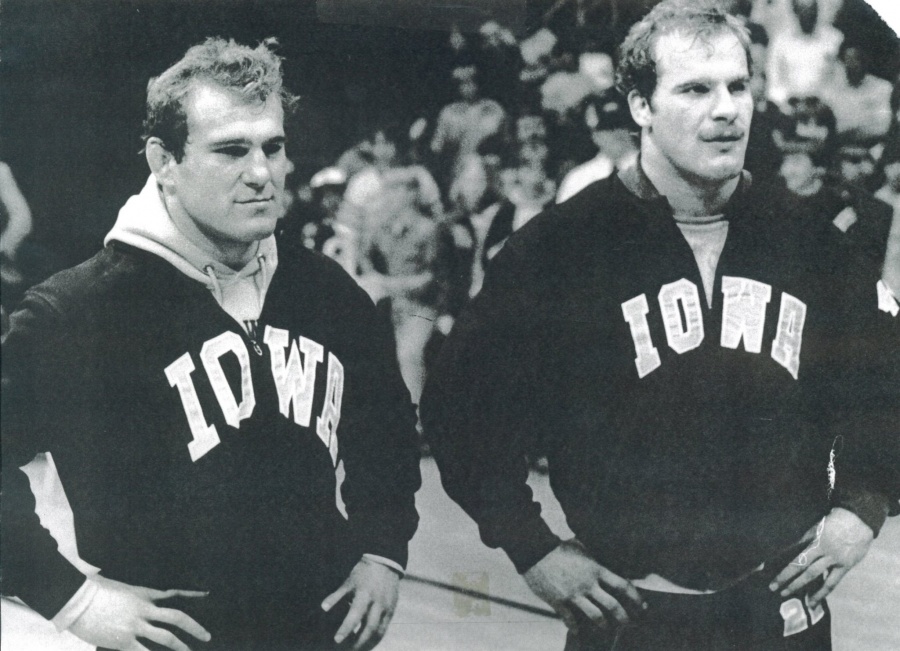 Their special guests on Saturday will be Ed and Lou Banach, the legendary brothers who played a huge role in the success of the Iowa program in the early 1980s, during the glory years of the Dan Gable era. Ed was a three-time NCAA champion and four-time finalist, at 177 and 190, and still today is the career Iowa leader with 73 pins. Lou was a two-time NCAA champion and three-time All-American at heavyweight despite being outweighed in almost every match.
Both used a wide-open, go-for-broke style that made them fan favorites all around the country. Lou pinned such great wrestlers as NCAA champions Bruce Baumgartner and Tab Thacker, and four-time All-American Steve “Dr. Death” Williams. Thacker weighed over 400 pounds when Lou pinned him in the 1983 NCAA meet.
To top off their sensational careers, both of them won gold medals in the 1984 Olympics in Los Angeles, Ed at 198 pounds and Lou at 220.
The Dan Hodge Trophy, which Mike created in 1995, will also be on display at their table. It is often called “the Heisman Trophy of wrestling” and over one million fans have seen it presented in person, at wrestling banquets and college football games.
Their special guests on Saturday will be Ed and Lou Banach, the legendary brothers who played a huge role in the success of the Iowa program in the early 1980s, during the glory years of the Dan Gable era. Ed was a three-time NCAA champion and four-time finalist, at 177 and 190, and still today is the career Iowa leader with 73 pins. Lou was a two-time NCAA champion and three-time All-American at heavyweight despite being outweighed in almost every match.
Both used a wide-open, go-for-broke style that made them fan favorites all around the country. Lou pinned such great wrestlers as NCAA champions Bruce Baumgartner and Tab Thacker, and four-time All-American Steve “Dr. Death” Williams. Thacker weighed over 400 pounds when Lou pinned him in the 1983 NCAA meet.
To top off their sensational careers, both of them won gold medals in the 1984 Olympics in Los Angeles, Ed at 198 pounds and Lou at 220.
The Dan Hodge Trophy, which Mike created in 1995, will also be on display at their table. It is often called “the Heisman Trophy of wrestling” and over one million fans have seen it presented in person, at wrestling banquets and college football games.Living Tough with Mike Chapman – Curran Jacobs Podcast
Monday, January 8th, 2024 | Podcast, Wrestling | No Comments
The Podcast “Combat Life with Curran Jacobs” interviewed Mike and launched the episode to start the new year on January 1, 2024. Listen in here!
Mike With Some of the Sport’s Best
Monday, January 8th, 2024 | Wrestling | No Comments
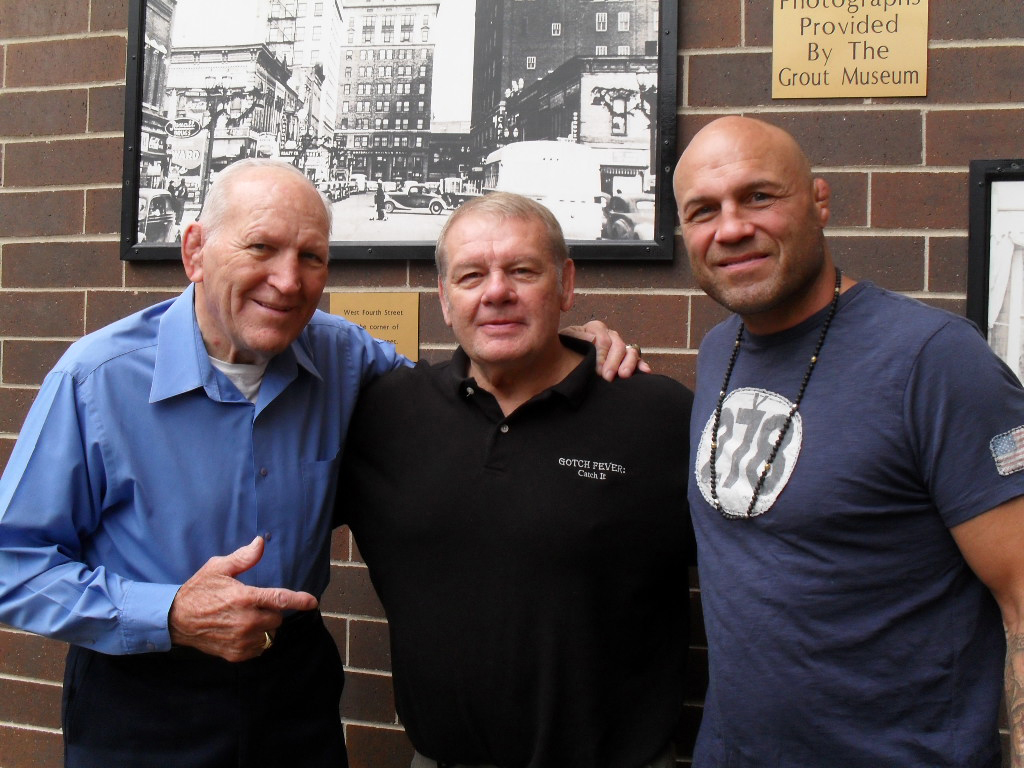
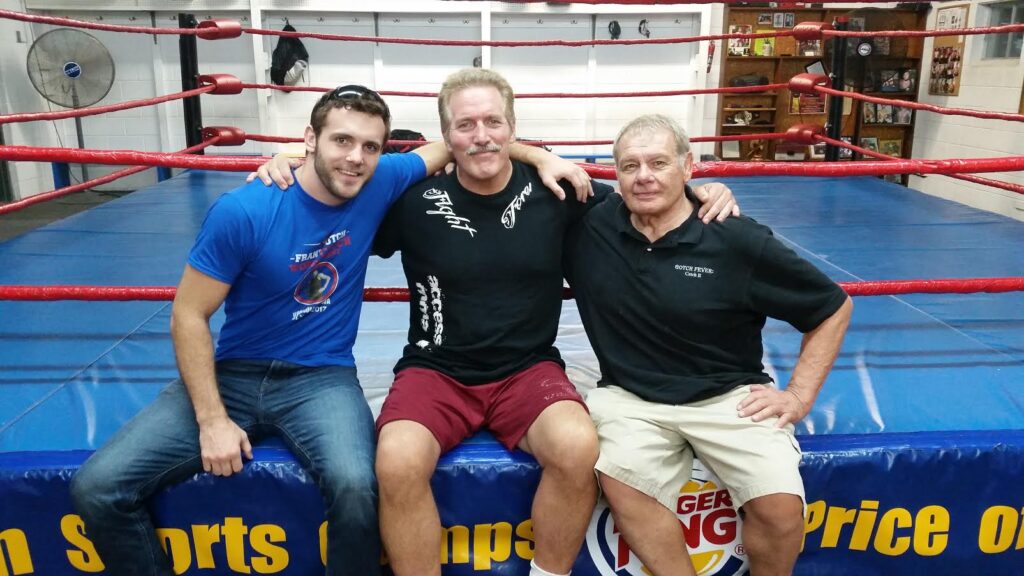
Mike has been honored to be friends with some of the biggest names in the history of combat sports. IN THE PHOTO ABOVE, he is with Dan Hodge (left), the only athlete to win national titles in both boxing and wrestling, and Randy Couture (right), the legendary MMA star who became a movie actor. IN THE PHOTO BELOW, he is with Dan “the Beast” Severn (center) and Curran Jacobs (left) in Dan’s training camp in Coldwater, Michigan. Dan is a hall of fame MMA star with numerous black belts, and Curran is a film actor and producer who has won major catch tournaments.
Upcoming Speeches and Appearances
- May 9, 2024 – Ben Petersen Speech - Newton, IA
- May 16, 2024 – "Voices of Inspiration" Speech - Newton, IA
- June 12, 2024 – Jasper County Museum "Brown Bag Lunch" Speech - Newton, IA
- June 22, 2024 – Martin "Farmer" Burns Memorial Plaque Ceremony - Big Rock, IA
Wrestling Tough, 2nd Edition – Now Available!
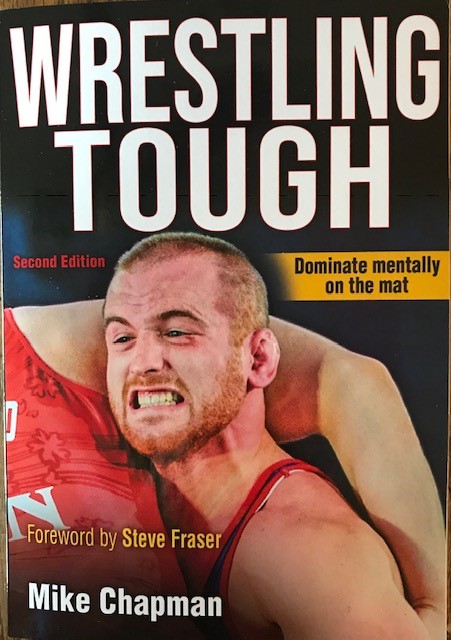 |
The 2nd edition to the popular Wrestling Tough, this new book is loaded with stories of many current stars and many behind-the-scene stories of legendary figures from the sport of Wrestling. As Dan Gable wrote, “Wrestling Tough is much more than learning about being successful on the mat. It’s for all who would like to dominate or develop a passion for any sport. Incredible reading! Get energized and be entertained at the same time!” |
Order today by calling Culture House at 641-791-3072 or online through Paypal by clicking the button below
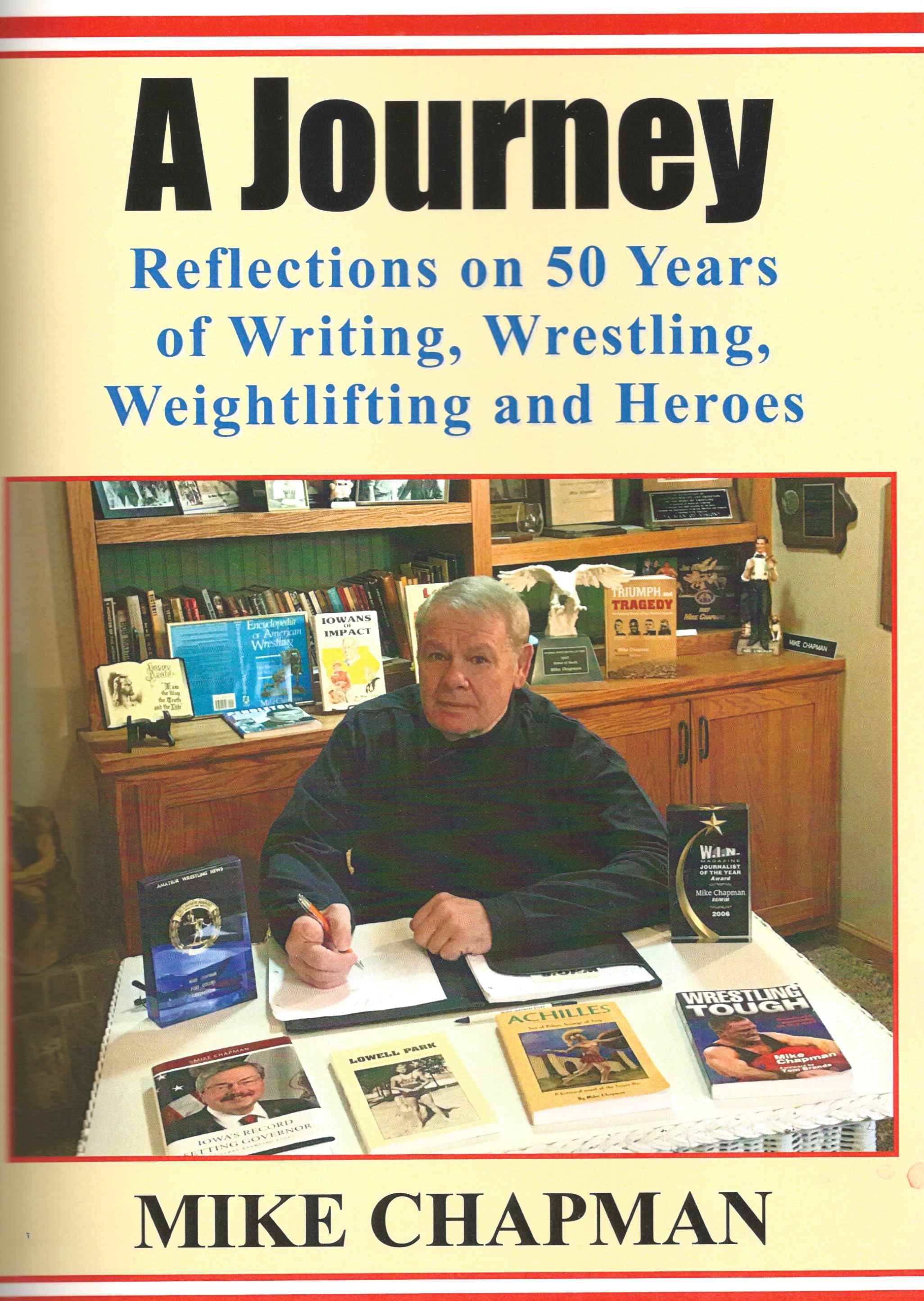
Journey: Reflections on 50 Years of Writing, Wrestling, Weightlifting, and Heroes – Order Today!
|
|
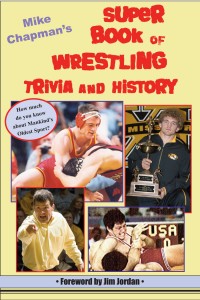
Super Book of Wrestling Trivia – Order today!
|
Blog Categories
- Awards (5)
- Book Signing (23)
- Books (34)
- Columns (13)
- Documentary (2)
- Iowa History Journal (43)
- Movie Scripts (2)
- Newspaper (3)
- Other (3)
- Podcast (3)
- Radio (14)
- Speaking (36)
- Tarzan (1)
- Uncategorized (4)
- WIN Magazine (10)
- Wrestling (55)